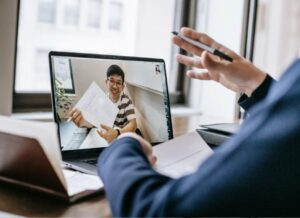
When remote auditing became a necessity rather than a novelty, plenty of practitioners assumed it would fade back into a niche option once travel restrictions lifted. That has not happened. Certification bodies, internal audit teams, and second party auditors have all kept remote and hybrid methods as a permanent part of their toolkit, and enough time has now passed to see clearly what works well and what still falls short.
Document review, record sampling, and interviews with people who can articulate their process clearly all translate well to a screen. An auditor can review a training matrix, a calibration log, or a set of corrective action records over a video call just as thoroughly as in person, provided the connection is stable and the client shares their screen rather than reading documents aloud. For organizations spread across multiple sites, this has genuinely reduced both cost and time without sacrificing much rigor in these specific areas.
Where remote methods still struggle is anywhere physical observation matters. Watching how a machine operator actually handles material, checking storage conditions in a warehouse, or noticing subtle housekeeping issues around a production line simply cannot be replicated through a camera pointed in one direction. Live video walkthroughs help, but they depend heavily on the person holding the camera, and a client keen to present a good impression can, consciously or not, steer the tour away from problem areas.
The most effective approach that has emerged is a genuinely hybrid model rather than a purely remote or purely on site one. Document heavy elements of an audit get handled remotely in advance, freeing up time on site for physical observation, shop floor interviews, and the kind of informal conversation that tends to surface honest information. This shortens the on site portion considerably while keeping the parts that need a physical presence intact.
Auditors who have adapted well to this environment have developed a new set of skills that barely existed in formal training a few years ago: managing a video interview so it does not feel stilted, judging when a remote review is genuinely sufficient versus when it needs to be backed up by a site visit, and being upfront with clients about the limits of what a screen can show. None of this replaces the fundamentals of good auditing, but it has become a core part of doing the job well in 2026.
 Where Management System Standards Are Heading in 2026
A look at how climate change requirements, AI governance, and integrated auditing are reshaping ISO management system standards.
Where Management System Standards Are Heading in 2026
A look at how climate change requirements, AI governance, and integrated auditing are reshaping ISO management system standards.
 Auditing Integrated Management Systems: One Visit, Multiple Standards
How to audit quality, environment, and safety together, and why it gives a more honest picture of how systems really work.
Auditing Integrated Management Systems: One Visit, Multiple Standards
How to audit quality, environment, and safety together, and why it gives a more honest picture of how systems really work.
 Ten Habits of Highly Effective Auditors
The everyday habits that separate auditors who add real value from those who just fill in forms.
Ten Habits of Highly Effective Auditors
The everyday habits that separate auditors who add real value from those who just fill in forms.