
ISO 14001:2015 has officially been withdrawn. If your organization is certified against it, the standard you have been auditing to for years has been replaced by ISO 14001:2026, published in April 2026 as the fourth edition. Before you panic about rewriting your entire environmental management system, here is a practical way to approach it.
Start by pulling out your current EMS manual and comparing it side by side with the new edition. The fourth edition is built directly on the 2015 framework, so you are not starting from scratch. What has changed is mostly clarity and structure, with a stronger alignment to current environmental priorities such as climate change, biodiversity, and resource efficiency. Reading the two versions together, clause by clause, is the fastest way to spot where your existing documentation already fits and where it needs a refresh.
Next, ask yourself why this revision happened now. ISO standards typically go through a revision cycle every five to ten years, and this edition arrives after nearly thirty years of ISO 14001 being used across almost every industry worldwide. That history matters because it tells you the core approach, identifying environmental aspects, managing legal requirements, setting objectives, and driving continual improvement, has not been abandoned. It has been refined.
A useful exercise for your next internal audit cycle is to walk your team through one simple question for each clause: does this still reflect how we actually manage our environmental risks today? If the answer is no, that is your worklist for updating the EMS. It also helps to loop in your certification body early, since the new edition is designed for smoother integration with other management system standards, which matters if you run combined audits for quality, safety, and environment together.
Finally, treat this as a planning exercise rather than a compliance scramble. Book a short review meeting with whoever owns your EMS, compare your manual against the new clause structure, and build a simple action list. That single step will do more to prepare your organization than any amount of reading about the changes in the abstract.
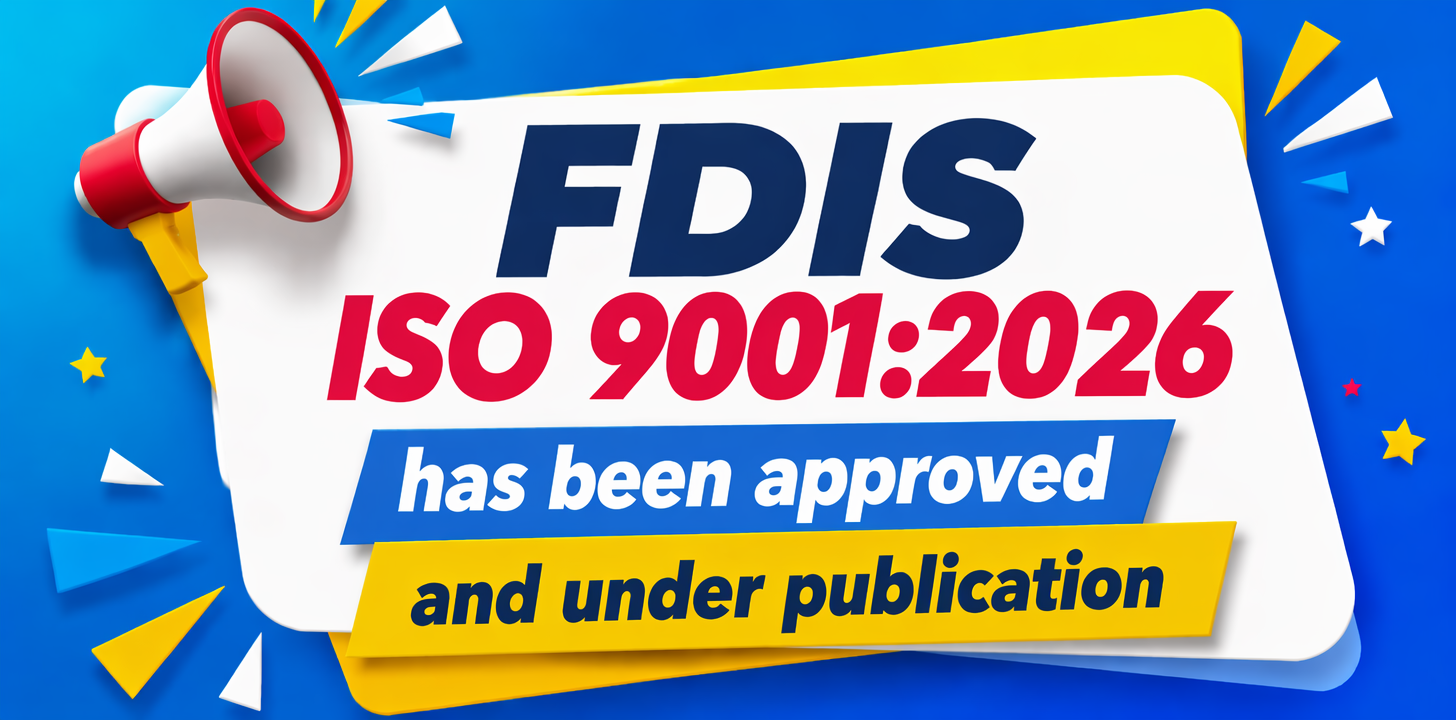 FDIS ISO 9001:2026 QMS Has Been Approved: What Is Actually Changing
The FDIS ballot has passed and ISO 9001:2026 is officially at Stage 60.00, International Standard under publication, with a September 2026 release targeted.
FDIS ISO 9001:2026 QMS Has Been Approved: What Is Actually Changing
The FDIS ballot has passed and ISO 9001:2026 is officially at Stage 60.00, International Standard under publication, with a September 2026 release targeted.
 Transitioning to ISO 14001:2026: A Step by Step Guide for Certified Organizations
A step by step guide to moving your certified environmental management system from ISO 14001:2015 to the 2026 edition.
Transitioning to ISO 14001:2026: A Step by Step Guide for Certified Organizations
A step by step guide to moving your certified environmental management system from ISO 14001:2015 to the 2026 edition.
 ISO 14001 or EMAS: A Practical Guide to Choosing the Right Framework
A practical comparison of ISO 14001:2026 and EMAS, and how to decide which framework fits your organization.
ISO 14001 or EMAS: A Practical Guide to Choosing the Right Framework
A practical comparison of ISO 14001:2026 and EMAS, and how to decide which framework fits your organization.