
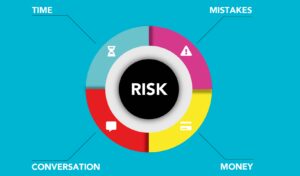
Internal audit programmes built purely on a fixed annual rotation tend to drift into irrelevance. Every department gets visited once a year regardless of how much has changed, how many complaints have come in, or how significant the process actually is to the business. A risk based programme flips this thinking and puts audit effort where it is most needed, which is exactly what internal auditing is supposed to do in the first place.
The first step is building an honest picture of where risk actually sits in the organization. This means looking beyond the obvious candidates and drawing on multiple sources of information: customer complaints, nonconformity history, process changes, staff turnover in critical roles, new equipment or software, and any near miss or incident data that exists. A process that has been stable and well controlled for five years with no complaints deserves far less audit time than one that just went through a major change in leadership or technology.
Scoring risk does not need to be complicated to be useful. A simple matrix that considers likelihood of failure against the impact of that failure, combined with a rough measure of how long it has been since the area was last reviewed, gives most organizations enough structure to prioritize sensibly. The goal is not academic precision. It is a defensible, repeatable way of deciding what gets audited, how often, and in how much depth.
A risk based programme also needs to stay flexible during the year, not just at the planning stage. If a supplier suddenly starts failing incoming inspection, or a new regulation comes into force, the schedule should be able to absorb an unplanned audit without derailing the whole plan. Programmes that are rigidly fixed for twelve months at a time tend to miss the events that matter most simply because nobody built in room to react.
Getting buy in from leadership is essential, because a risk based programme sometimes means skipping areas that have traditionally been audited every year, and that can feel uncomfortable to people used to the old rhythm. Explaining the logic clearly, and showing how audit resource is being redirected toward genuine risk rather than removed altogether, usually resolves that discomfort quickly once results start showing up in fewer surprises and more useful findings.
 Process Approach Auditing: A Practical Walkthrough
How to move beyond checklist auditing and follow a process from input to outcome.
Process Approach Auditing: A Practical Walkthrough
How to move beyond checklist auditing and follow a process from input to outcome.
 Root Cause Analysis: Moving Beyond the Five Whys
Why the five whys technique has limits, and which tools work better for complex or recurring failures.
Root Cause Analysis: Moving Beyond the Five Whys
Why the five whys technique has limits, and which tools work better for complex or recurring failures.
 Getting Ready for Your Certification Audit Without the Panic
How to prepare for a certification visit so it becomes a useful checkpoint rather than a source of dread.
Getting Ready for Your Certification Audit Without the Panic
How to prepare for a certification visit so it becomes a useful checkpoint rather than a source of dread.